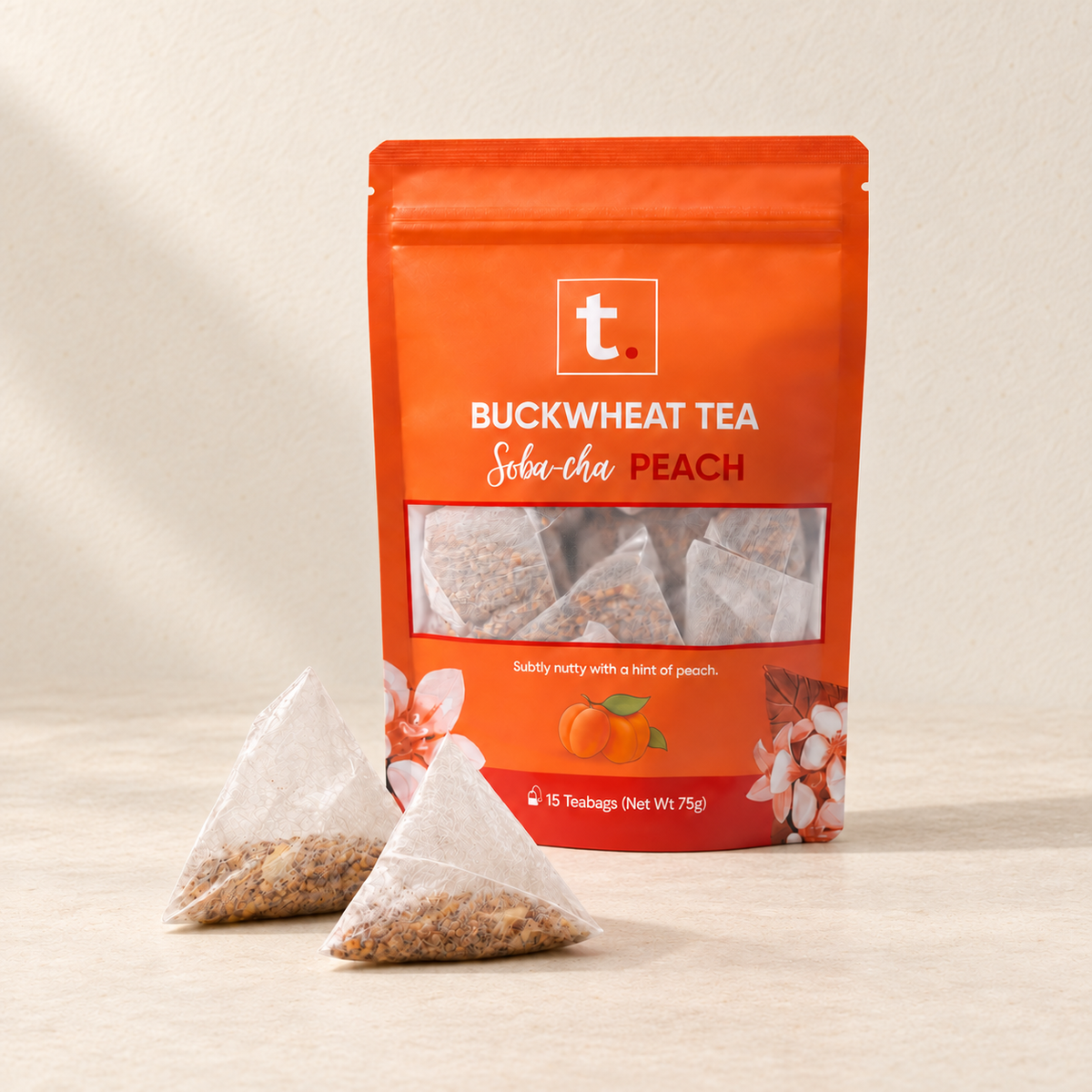
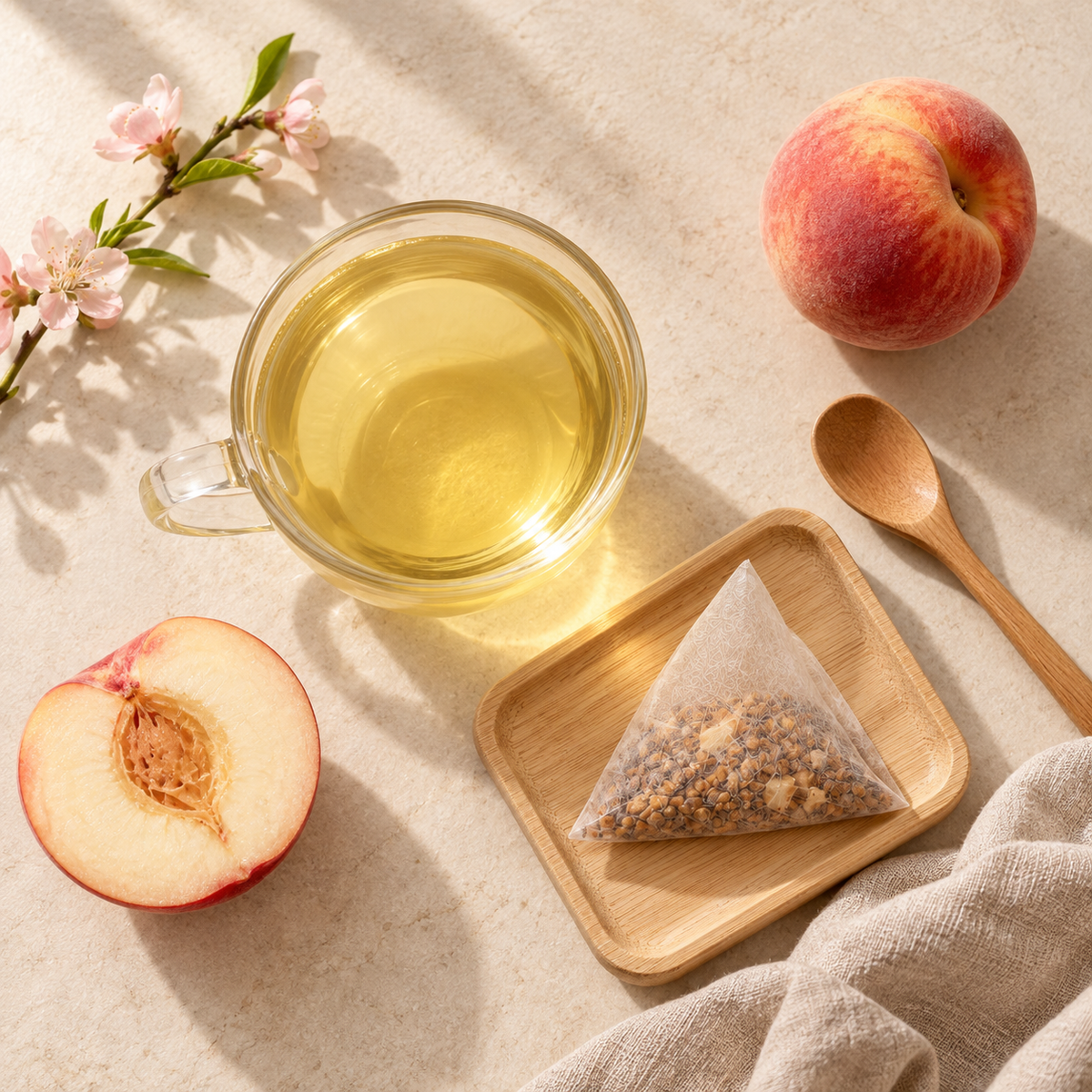
Buckwheat tea, known as soba-cha in Japan, is often described as warm, wholesome, and comforting. A hug in a mug.
But if you’ve never tried it before, it can be hard to imagine what that actually means.
Is it like green tea? Herbal tea? English tea? Something else entirely?

A simple answer
Buckwheat tea has a naturally nutty, roasted flavour, with a smooth, gentle finish.
It’s light, slightly sweet, and easy to drink — with none of the bitterness you might expect from teas like green tea or black tea.
If you’re wondering whether you can enjoy it any time of day, you can read more about whether buckwheat tea contains caffeine.
More like roasted grains than tea leaves

Unlike green or black tea, buckwheat tea isn’t made from leaves.
It’s made from roasted buckwheat kernels, which gives it a flavour that’s closer to:
-
toasted rice (e.g. roasted rice tea, genmaicha)
-
roasted nuts
-
or even a light cereal note
It’s subtle, but distinct.
Smooth, never bitter
One of the first things people notice is what isn’t there.
No sharpness. No dryness. No lingering bitterness.
Just a soft, rounded flavour that feels easy and refreshing from the first sip.
A gentle natural sweetness
There’s also a quiet sweetness to it.
Not sugary - more like the kind of warmth you get from toasted grains.
It’s the reason many people drink it just as it is, without adding anything.
How it compares to other teas
If you’re trying to picture it:
-
Green tea is fresh and slightly grassy
-
Black tea is deeper and more robust
-
Buckwheat tea sits somewhere softer: warm, toasted, and calming

It changes as it steeps
The flavour develops gently over time.
-
the first sip is lighter
-
a longer steep brings out more of the toasted notes
But it stays smooth throughout.
Hot or cold
Both work, just slightly different.
-
Hot feels more comforting and wholesome, with a fuller aroma
-
Cold is lighter, cleaner, and subtly sweeter - a delicious, refreshing and nourishing alternative to chilled water on summer days
An easy tea to come back to
Buckwheat tea isn’t overpowering.
It doesn’t demand attention.
It’s the kind of drink that fits quietly into your day - whether that’s in the morning, after a meal, or in the evening when you want something calming.
If you’re curious, you can read more about the benefits of buckwheat tea and how it’s traditionally enjoyed, from its antioxidant content to its naturally calming qualities.
Curious to try it?
If you’ve been looking for a tea that’s gentle, caffeine-free, and easy to enjoy, buckwheat tea is a simple place to start.