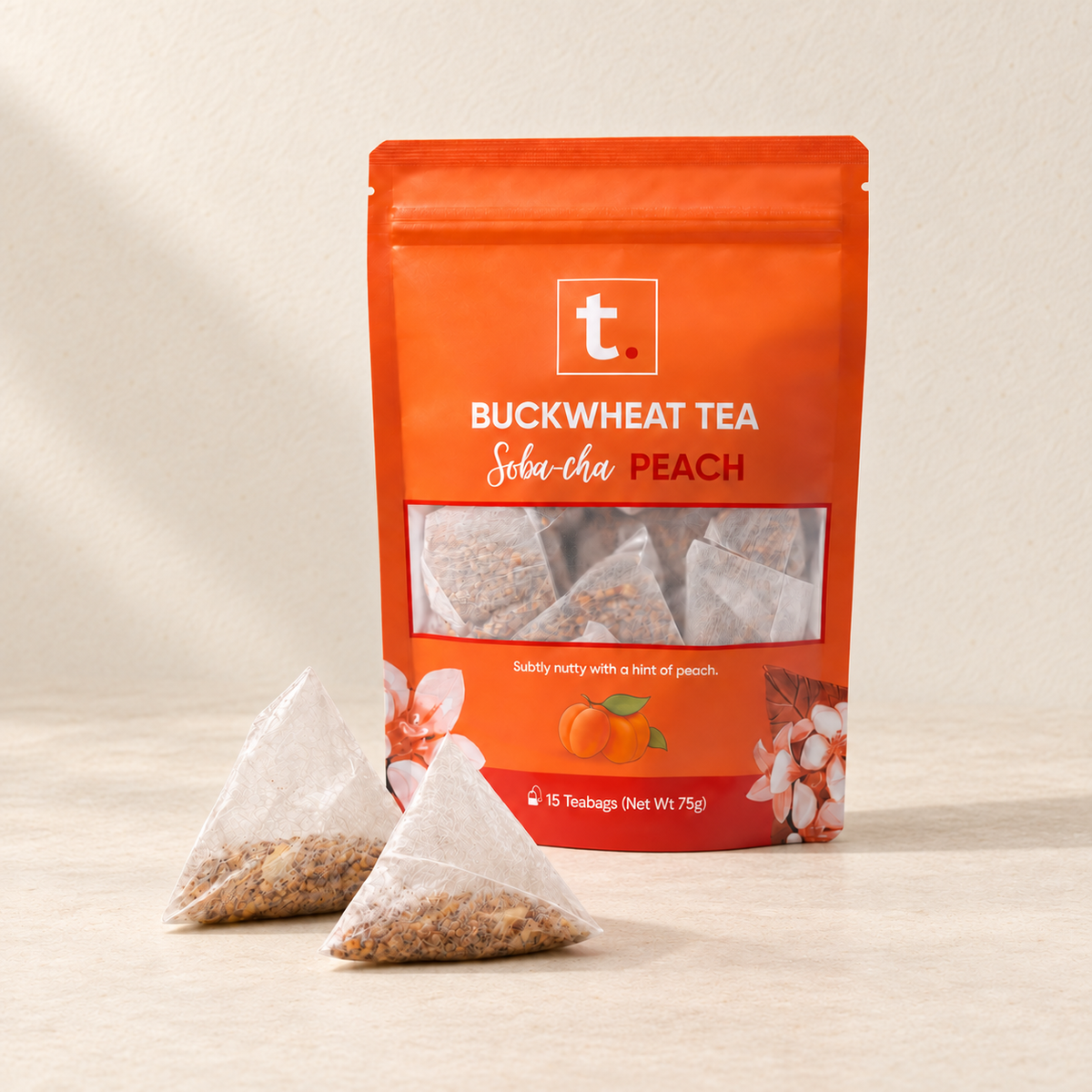
Buckwheat tea and green tea sit in a similar world - both are teas commonly enjoyed in Japan, and both are light, simple drinks with many of the same health benefits.
But they’re quite different in how they taste, how they are made, and how they feel to drink.
Buckwheat tea has a warm, toasted & slightly nutty flavour, rather than the grassy or sometimes bitter notes of green tea. And unlike green tea, buckwheat tea is naturally caffeine-free.
If green tea has never quite been for you, this might feel like an easier place to start - with many of the same benefits.
Quick Answer: What’s the difference between buckwheat tea and green tea?
Buckwheat tea is made from roasted buckwheat seeds and is naturally caffeine-free, with a warm, nutty flavour. Green tea is made from tea leaves, contains caffeine, and has a fresher, more grassy taste.
Buckwheat Tea vs Green Tea
| Buckwheat Tea | Green Tea | |
|---|---|---|
| Made from | Roasted buckwheat kernels | Tea leaves |
| Caffeine | Caffeine-free | Contains caffeine |
| Taste | Warm, nutty, toasted | Fresh, grassy, sometimes bitter |
| Feel | Calm, gentle, grounding | Light, slightly energising |
| Best time to drink | Anytime, especially evening | Morning or early afternoon |
| Benefits | Antioxidants, rutin (circulation, skin), supports digestion | Antioxidants (catechins), often linked to metabolism |
| Good if you… | Prefer something smooth and caffeine-free | Enjoy a fresh taste and gentle lift |
How they’re made

Buckwheat tea, known as soba-cha, is made from roasted buckwheat kernels. It doesn’t come from the tea plant, which is why it’s naturally caffeine-free.
Green tea, on the other hand, is made from unoxidised tea leaves.
That difference shapes everything else - from flavour to how they feel to drink.
Taste and feel
Both teas taste quite different.
Buckwheat tea is warm, nutty, and lightly toasted.
Green tea is fresh, grassy, and can be slightly bitter.
Buckwheat tea feels softer and more rounded, while green tea can be sharper depending on how it’s brewed.
If you’ve never quite enjoyed the taste of green tea, buckwheat tea can feel like a gentler alternative.
If you want to learn more, here's an article that explores in depth what buckwheat tea tastes like.

Caffeine content
Another simplest difference is caffeine-content.
-
Buckwheat tea is naturally caffeine-free
-
Green tea contains caffeine
This means buckwheat tea can be enjoyed at any time of day, including in the evening.
If you’re curious, you can read more about whether buckwheat tea contains caffeine.
Health benefits
Buckwheat tea offers many of the same kinds of health benefits people look for in green tea, but without the caffeine or bitterness.
Like green tea, it’s rich in antioxidants. It also contains rutin, a plant compound linked to circulation and overall skin health.
It’s also often enjoyed as a gentle, soothing drink that can support digestion and feel easy on the body.
When to choose each
It’s less about one being better than the other, and more about what you need in the moment.
Morning or early afternoon → green tea
Afternoon or evening → buckwheat tea
Many people find there’s a place for both.
A softer alternative
If you’re looking to reduce caffeine, or simply want something gentler, buckwheat tea offers a natural alternative.
It’s the kind of tea that fits quietly into your day.